OpenAI just shipped three new GPT-5.6 models. Why won't the US government let anyone near them yet?
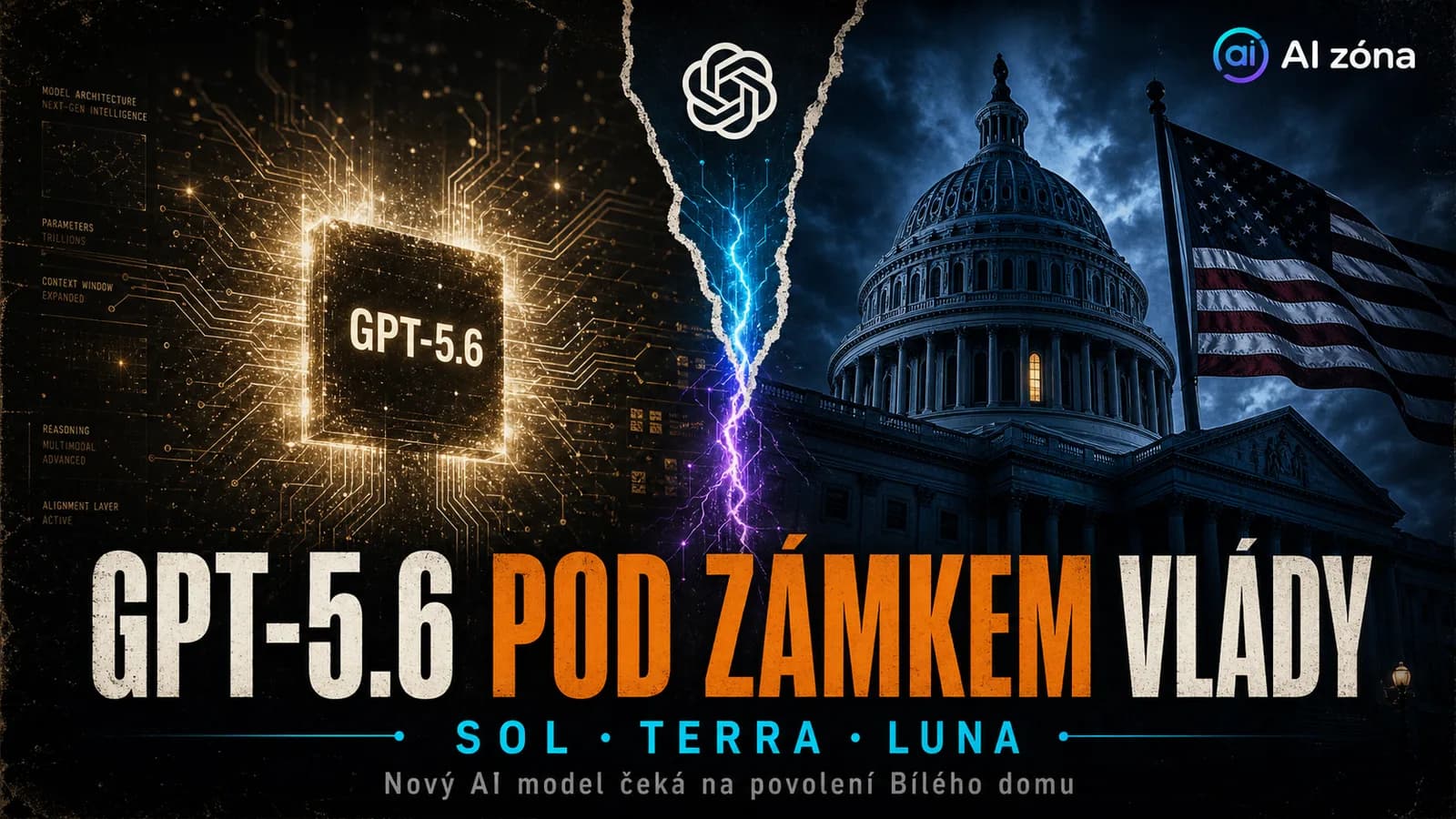
OpenAI unveiled GPT-5.6 in three tiers, Sol, Terra and Luna. Because of a Trump administration intervention, only a handful of vetted companies can touch them so far.
News analysis
GPT-5.6 Sol + GPT-5.6 Terra
What's new
On Thursday 26 June 2026, OpenAI introduced the GPT-5.6 family, three models under a new naming system. Sol is the flagship, Terra is the balanced pick for everyday work, and Luna is the fastest, cheapest option. The company now separates the generation number from the capability tier, so Sol, Terra and Luna can each keep improving on their own schedule instead of waiting for a shared version bump.
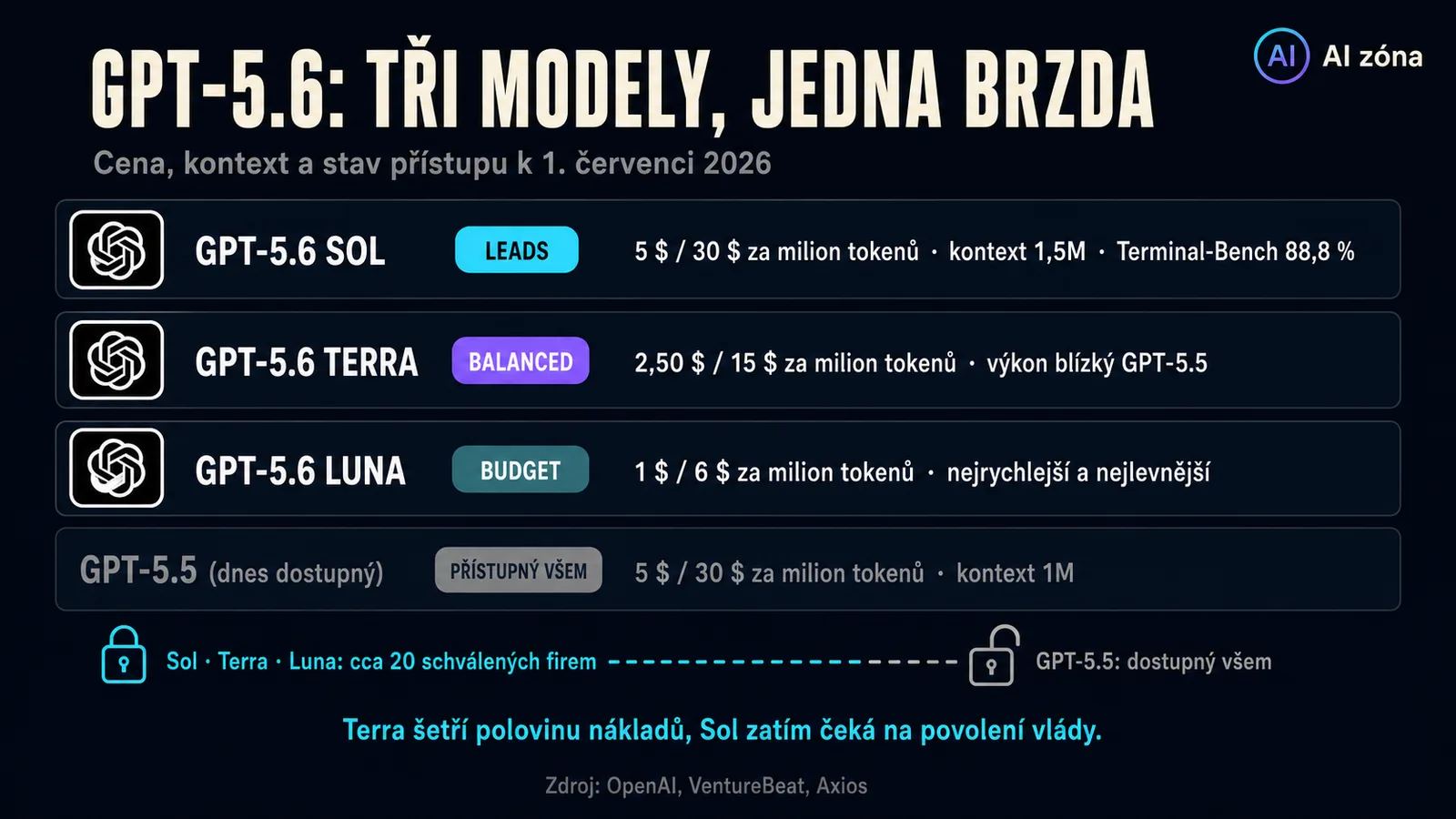
Sol is also the most capable model OpenAI has ever shipped, especially in coding and long security tasks. On the Terminal-Bench 2.1 test it hit 88.8 percent, and the Sol Ultra configuration reached 91.9 percent. That very strength is what complicated the launch. A few weeks earlier, on 2 June 2026, President Donald Trump signed an order requiring federal agencies to review the most capable AI models before their public release. Shortly after, the Office of the National Cyber Director and the Office of Science and Technology Policy asked OpenAI to limit GPT-5.6 to a narrow set of companies instead of a public launch.
The result: around twenty pre-vetted organizations have access today, with the government deciding on each one case by case. Sam Altman called it a short-term step and said working with the government's process is the fastest path to a broader launch in the coming weeks. Approved companies are already buying tokens normally, just exclusively through the API and Codex, not through ChatGPT.
What you'll like most about it
You can plan which model fits before you can even reach it. The new naming system tells you straight away what each tier is for: Sol for raw power, Terra for the balance of price and quality, Luna for speed and low cost. Once the rollout widens, you won't have to guess by trial and error, the roadmap is already readable today.
The real savings point mostly at Terra. It offers performance close to GPT-5.5 at half the price, $2.50 per million input tokens and $15 per million output tokens. For companies already paying for GPT-5.5 that don't need the absolute top tier, that's a clear signal of where AI pricing is heading. Luna pushes the price down further to $1 and $6 per million tokens, making it a cheap choice for volume work like sorting, tagging or short customer replies.
Who it's for
Developers and companies with Codex
If your company is among the approved partners, you can already test Sol on real code through the API or Codex. Everyone else is planning which model to move to once the rollout widens.
- access review
- migration planning
- testing Sol on code
Companies with sensitive data and security teams
Sol can test vulnerabilities faster than earlier models, so security teams will want to know when it reaches regular production and what usage rules to set before the whole company starts using it.
- tracking security limits
- risk assessment
- drafting internal rules
Everyday ChatGPT users
For everyday writing, research or planning, nothing changes for you today. GPT-5.5 stays available, and once OpenAI opens GPT-5.6 publicly, you'll hear about it directly inside ChatGPT.
- no action needed now
- watch for the wider-rollout announcement
How to use it in practice
If you don't have GPT-5.6 access yet, the best move is to prepare for the switch rather than wait with your arms crossed. Map out which tasks currently run on GPT-5.5 and how much they cost you, so you have a comparison ready once Terra or Luna open up. For tasks where data sensitivity or security matters, draft your internal rules now for when to deploy the stronger model and when to stick with the proven GPT-5.5.
A real-world example
A small software company today pays for GPT-5.5 to run code review and test for security bugs. Instead of waiting for GPT-5.6, it calculated its monthly token spend and split its tasks into two buckets: routine review that could move to the cheaper Terra, and sensitive security testing where it will wait for clear usage rules around Sol. Once the rollout widens, the switch will take hours instead of weeks, because the decisions are already made.
Tools worth a look
GPT-5.5
OpenAI
The highest standard model OpenAI offers until GPT-5.6 opens to the wider public. Same price as Sol, a somewhat smaller context window and weaker results on security benchmarks.
Best for
companies without GPT-5.6 access
Claude Opus 4.8
Anthropic
A strong choice for agentic work and longer code, available without waiting on a government review. A solid backup for companies outside the twenty vetted GPT-5.6 partners.
Best for
developers who don't want to wait for approval
Codex
OpenAI
One of the two paths through which GPT-5.6 works at all today, alongside the direct API. Worth watching, since OpenAI's wider-rollout announcement is likely to land here first.
Best for
developers with approved access
Summary
GPT-5.6 shows where OpenAI is heading, three capability tiers instead of one version number, but for now only a handful of vetted companies can see it. For the first time in history, the US government preemptively restricted the release of a model from a domestic AI company, over a real concern about its cybersecurity capabilities. Nothing changes for you as an everyday user, GPT-5.5 stays within reach. It is worth tracking when the rollout widens, though, and having it already calculated which of the new models, Terra for balance or Luna for volume, will save you the most.
Sources
- OpenAI, Previewing GPT-5.6 Sol: a next-generation model
- VentureBeat, OpenAI unveils GPT-5.6 Sol, Terra and Luna models
- Axios, Trump administration is asking OpenAI to stagger the release of its next AI model
- Cybersecurity News, OpenAI Released GPT-5.6 Sol With Limited Access and Strong Cyberattack Protections
Frequently asked questions
What people often ask
Can I use GPT-5.6 right now?
Most people can't. Sol, Terra and Luna are only running in a limited preview for around twenty companies approved by the US government, and access goes through the API and Codex, not regular ChatGPT. There is no public waitlist. OpenAI promises a wider rollout across ChatGPT, Codex and the API in the coming weeks, but has not confirmed an exact date.
How did OpenAI decide who gets access first?
The government decides on each company case by case. Access requires a review by the Office of the National Cyber Director and the Office of Science and Technology Policy, which assess the security risk. This is the first time the US government has preemptively restricted the launch of a model from an American AI company before its public release.
How do Sol, Terra and Luna differ from GPT-5.5?
Sol costs the same as GPT-5.5, $5 per million input tokens and $30 per million output tokens, but has roughly 50 percent more context and noticeably stronger coding and security performance. Terra matches GPT-5.5 performance at half the price. Luna targets fast, cheap tasks at $1 input and $6 output per million tokens. The new naming system also separates a model's generation from its capability tier, so Sol, Terra and Luna will keep getting their own updates going forward.
Why doesn't the government want Sol freely available?
According to OpenAI, Sol is the company's most capable model yet for long-horizon security work, including finding and testing vulnerabilities. It scored 88.8 percent on Terminal-Bench 2.1, and 91.9 percent in the Ultra configuration. It did not cross the so-called Cyber Critical threshold, the model found bugs in Chromium and Firefox but could not autonomously assemble a full working exploit. That exact boundary is what the government wants to control before the capability reaches anyone.
How much does GPT-5.6 cost and when will it hit Codex?
Sol runs $5 per million input tokens and $30 per million output tokens, Terra costs $2.50 and $15, and Luna costs $1 and $6. Access via API and Codex today belongs only to the approved companies in the limited rollout. OpenAI has flagged a wider release across ChatGPT, Codex and the public API in the coming weeks, but no exact date has landed yet.
Keep going
Related articles
More guides from the same area, topics and tools.

OpenAI launched Daybreak Red. GPT-5.6-Cyber already found a hole in Chrome
OpenAI opened access to a new model called GPT-5.6-Cyber through the gated Daybreak Red program. It already surfaced a Chrome bug patched as CVE-2026-15903, but the key goes only to vetted defenders.

Claude Sonnet 5 gets almost as good as Opus 4.8 for half the price. Is that actually true?
On June 30, 2026, Anthropic made Claude Sonnet 5 the default model for Free and Pro plans. This article was written by Sonnet 5 itself, no spin, about when it's actually worth it.

America just pulled Claude Fable 5 for all foreigners. Has the hybrid AI war begun?
On 12 June 2026 the US government ordered Anthropic to disable Claude Fable 5 and Mythos 5 for all foreign nationals. What does it mean for Europe and what can you do about it?